Pausing for Progress – A Leadership Tool for 2026
I want to start this year’s first newsletter a little differently.
No bold declarations about goals or resolutions (although of course, I have some of those) and no pressure to have everything figured out by now.
Instead, I want to start with our CEO, Henry.
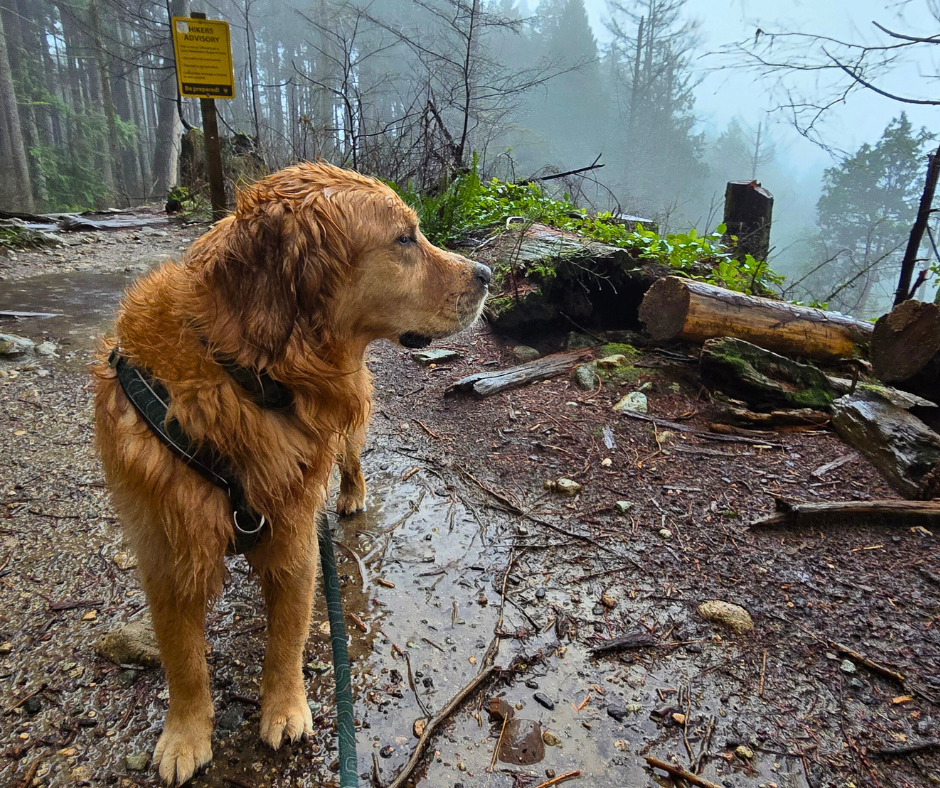
Recently, while we were exploring the forest trails in the North Shore mountains behind Vancouver, we stopped for a moment, and I took a photo of Henry.
He’s standing still, head looking off to the side, eyes focused somewhere off in the distance. Not rushing. Not pulling on the leash. Just… looking.
I realized afterward how familiar that posture felt. Not lost. Not stuck. Just pausing long enough to decide where to go next. And I think that’s exactly where many supervisors, managers, and leaders find themselves right now.
Leading While Quietly Unsure
If you’re being honest with yourself, you might lead others confidently on the outside while feeling personally uncertain on the inside.
You’re showing up. You’re making decisions. You’re supporting your people.
And yet, somewhere underneath it all, there’s a quiet question running in the background:
“Am I heading in the right direction?”
That uncertainty doesn’t mean you’re failing as a leader, but means that you’re human.
The Resilience Advantage
I am currently developing a workshop for a client called The Resilience Advantage – How to lead in times of uncertainty. It is focused on helping those with a Duty of Care for others to make sure they look after themselves first, rather like the oxygen-mask philosophy in aircraft safety presentations.
Far too often, leaders respond to uncertainty by speeding up rather than pausing. They book more meetings. They want more action. They feel the need to make more decisions. And to experience more (forward?) motion. Yet, pausing or slowing down can be the most productive move for leaders and their teams.
I have been guilty of all of this myself – and it’s not healthy. For anyone.
You’ve likely heard of the phrase, “Doctor, heal thyself…”
That has definitely been me. It is as though movement itself will solve the uncertainty. Sometimes it does, but often it doesn’t.
The Cost of Rushing Direction
In leadership, urgency can easily masquerade as effectiveness. In my daily journal, I have a list of important things for Phil to review regularly to make sure I don’t go off track and realize it only when it’s too late. It is a list I have titled simply ‘Pitfalls’.
One note that I often read in that list is:
I think busy time is the same as productive time.
This is where we rush toward solutions, we chase the next initiative, and we react to the loudest issue in the room. And before long, we’re moving fast – but not forward.
I’ve learned this lesson the hard way in my own journey.
Story For A Smile
My family will tell you about one infamous moment when, several years ago, during a camping trip through British Columbia and Alberta, I absolutely, positively knew the way to get from Banff onto the Icefields Parkway.
I had done some research and knew there were no gas stations along the route within the Glacier National Park. So, we fueled up at the last gas station in Banff before hitting the road towards our appointment to jump onto one of those amazing machines to take us up onto the glaciers.
When we drove past the first gas station, I dismissed the ‘clue’ as a new regulation I had not read about that now allowed a gas station to be just inside the park boundary, and I drove on.
When we passed the second gas station, I received feedback from within the car about whether we might have strayed.
Of course not – I knew where I was going. And, after all, I was the one driving the car.
Welcome to British Columbia
When we drove past the sign that said “Welcome to British Columbia,” I decided to stop and actually listen to the feedback in the car.
If you know your regional geography, you will either be smiling or wondering how they ever trusted me with a firearm for 27 years.
But I think this story is likely true for many of us.
There were moments when I thought the answer was to push harder – (to drive faster) – to be more decisive, more visible, more assertive.
What I didn’t realize at the time was that my team didn’t need me to be faster. They needed me to be clearer. And clarity doesn’t come from rushing. Clarity comes from pausing long enough to take stock of where you are, what matters, and what’s actually being asked of you in this moment.
The Power of the Pause
That’s why I keep coming back to the photo of Henry on the trail. Dogs don’t pause because they’re weak or indecisive. They pause because they’re gathering information.
They’re reading the environment. They’re noticing what we’ve missed. They’re deciding which direction makes sense before committing their energy. As leaders, we rarely give ourselves that same permission.
We assume pausing means falling behind. We assume that slowing down means losing momentum. We assume uncertainty should be hidden, managed privately, or ignored altogether. But sometimes the most responsible thing a leader can do is stop – and take a deep breath.
Here is a terrific TEDx Talk from Stacey Schuerman on that very topic.
This idea is not about disengaging. It is not about avoiding decisions, but about leading from intention rather than reaction.
You’re Not Behind
If this year feels like it started faster than you expected, I want you to hear this clearly:
You’re not behind. You’re simply pausing at a fork in the trail, just as Henry is in the photograph. Choosing direction—by pausing—matters more than speed.
Leadership isn’t always about knowing the answer. It’s about being willing to pause long enough to ask the right questions:
- What actually needs my attention right now?
- What am I reacting to versus what truly matters?
- Where am I heading out of habit rather than intention?
- What would change if I gave myself space to think before acting?
If you look behind Henry, you will see there is a Hikers Advisory sign, designed to get people’s attention. These aren’t questions you answer in the noise of urgency. They require stillness.
Permission to Breathe
So, consider this your permission slip for the first week of the year. Permission to pause. Permission to breathe. Permission to stop proving and start noticing.
One of my favourite books I read last year was Slow Productivity by Cal Newport. He describes this process altogether much better than I can ever hope to.
You don’t need to rush in a direction just because others expect movement. You don’t need to have everything figured out to be a good leader. You don’t need to sprint through uncertainty to get past it.
Sometimes, the most effective leadership move is to stand still long enough to see clearly.
Like Henry on the trail. Head up. Eyes open. Choosing direction with care.
Not becoming a different person overnight. Not fixing everything at once. But growing from a place of awareness, intention, and humanity. Starting with yourself.
Before you rush off this week – Stop. Take a deep breath. And decide where you actually want to go.
You’ll Get There Faster
I think there was a story written about a tortoise and a hare that spoke about this as well.
I probably should read it again….